For this blog post, I am going to discuss research which focuses on the value of Social Media Brand Communities (SMBC) to that brand and examine how the community contributes to brand trust. This is a worthy study for any business seeking to build brand trust with their consumers online. This blog addresses several points, including the results of the research paper, application to real life practices, and connections to Urban Outfitters.
Introduction to the Research
The 2018 article discusses the research of, “Trust transfer in social media brand communities: The role of consumer engagement,” by Liu and his team from the School of Management or the Department of Information Systems in China. The research is to understand the circumstances under which SMBCs benefit the brand relationship as the popularity of social media raises dramatically. This research was based on a survey of 279 SMBC participants from Chinese social media community. In addition, trust transfer theory was also discussed in this study to explain how trust can be transferred through cognitive process and the communication process.
What’s Trust got to Do With it?
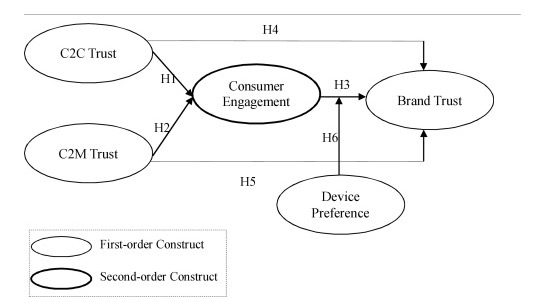
The results show that consumers’ brand trust can be transferred from the SMBC to the brand, and consumer engagement in SMBC has a positive effect on brand trust. In other words, brand trust is significantly influenced by Consumer-to-Consumer trust (C2C), Consumer-to-Marketer (C2M), and consumer engagement. The brand trust is affected by consumers’ trust in other consumers and in marketers.
How Does this Apply to Real-Life Practice?
Two approaches were discussed in this research to explain how their findings can apply in real life practices. Firstly, because of the findings, the authors indicated that managers should pay more attention to both the value of trust among consumers and consumers’ trust in the marketers that manage their brand communities. Timely responses to consumers’ messages and effective problem solving can also promote consumers’ trust.
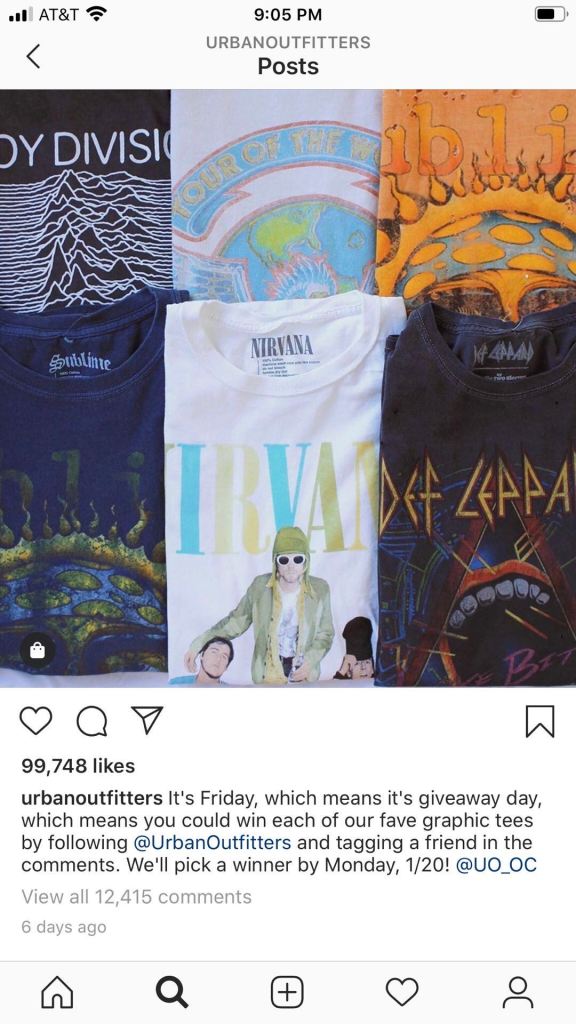
Secondly, managers can provide consumers with updated brand-related information through posts, including brand news, new product releases, special offers, and other brand relevant information. Moreover, managers can also provide various kinds of incentives to attract consumer engagement. A lucky draw for forwarding a brand-related post, or initiating a game or a topic around the brand using a hashtag, are good strategies to improve consumer engagement.
Christina Giakoumaki and Areti Krepapa in their research, “Brand Engagement in self-concept and consumer engagement in social media: the role of the source,” also discussed that posting more inspiring, emotional, and social media content can appeal more customers and gain a sustainable engagement. In addition, the author also claimed that encouraging consumers to post positive content could be a good way to attract public attention.
How Does Urban Outfitters Do on Engagement?
As I wrote in my previous blog post, “How Urban Outfitters Promotes Themselves on Social Media?” they manage their Facebook, Twitter, and Instagram pretty well. For example, they post very often on each platform, but they rarely respond to their customers on their social media. So, they may give customers bad impression online and lose brand trust online. According to the research, the authors suggest that brand trust can be transferred through communication so Urban Outfitters should respond to consumers’ messages and complaints as soon as possible to get consumers’ trust and engagement online. However, on their Instagram, Urban Outfitters does a good job to get consumers’ engagement from their SMBC as they use a lot of incentives to attract consumer engagement, like a lucky draw (Click to see Urban Outfitters’ Instagram page). This strategy can not only motivate their consumers but also get more followers as well as consumer engagement.
Conclusion
The study indicates that brand trust can be transferred from consumers’ trust in other consumers and marketers in brand community online, so it is necessary to understand how it can be applied to companies’ practices. Several strategies include to timely respond consumers’ messages, provide consumers with relevant brand information through posts, offer perks to online communities, and motivate consumers to access SMBCs using their mobile devices.
Do you believe that consumers’ brand trust can be transferred from their trust in other consumers and marketers in SMBC? Leave a comment below and let me know what you think about the results of this study or social media practice of Urban Outfitters.
 Shuzhen's Blog